The Mining Claim Exception Hiding in Every Ohio City Title Commitment
September 10, 2026
September 10, 2026
Ask a buyer what they think they are purchasing when they put an offer on a cabin outside Ohio City, and the answer is almost always the same: land. Ask a title company the same question and the answer gets a footnote.
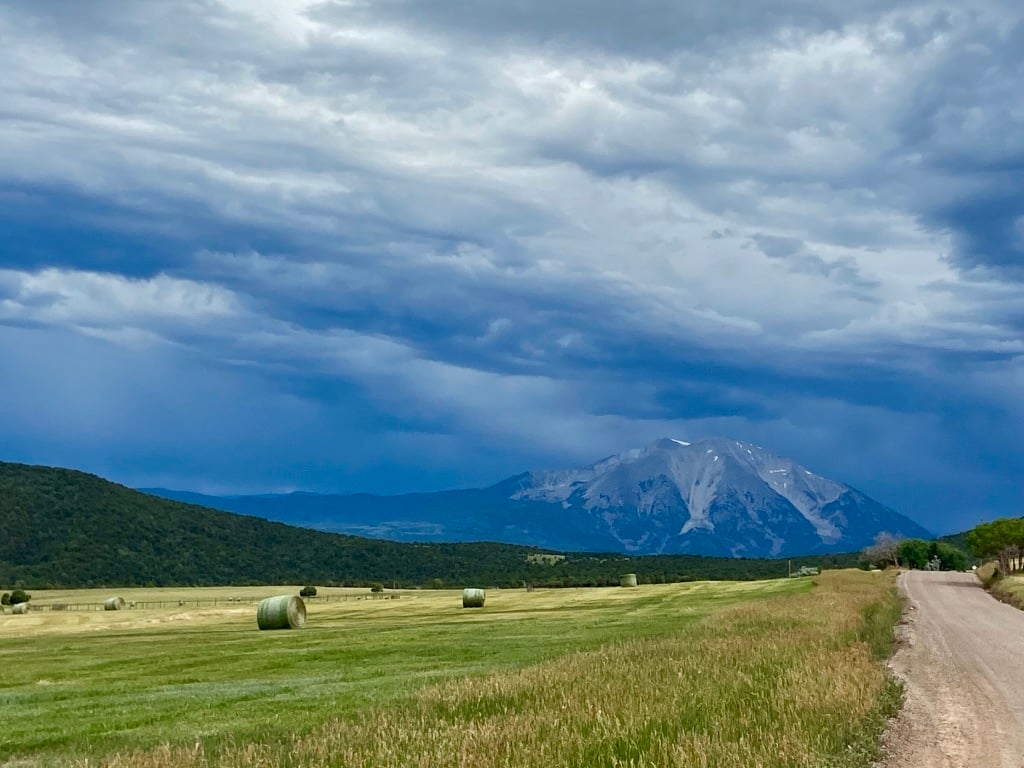
Ohio City was not laid out as a modern subdivision. It grew out of gold and silver claims staked in the 1860s and re-staked through two more boom cycles before the last mine wound down around 1916. The town was first called Eagle City, then renamed by the prospectors who came from Ohio and stayed once the initial gold played out. Today it is a scatter of seasonal cabins sitting on that same ground, reached by County Road 76 about twenty miles east of Gunnison, with a walking tour that passes the restored 1906 Town Hall and the remains of the Gold Link mine and mill that carried the town through its final boom.
That history is not decoration. It is the reason a title commitment on an Ohio City property reads differently than one on a lot platted last decade, and the reason a buyer who flips past the exceptions page can end up owning less than they expected.
Under the General Mining Act of 1872, a prospector who found a valuable mineral deposit could stake a claim, complete a required amount of work on it each year, and eventually apply to the federal government for a patent. A patent is simply an old word for deed. Once granted, it passed full title, surface and minerals both, from the United States to the claimant, the same way a homestead patent passed acreage to a farming family who proved up their claim. From that point forward the owner could sell the ground, build on it, or leave it alone, with no further mining required.
An unpatented claim is a different animal. The federal government never passed title on it. What the claimant holds is a possessory right to extract minerals, not ownership of the ground itself. No patent means no deed, and no deed means no land changes hands.
Congress stopped accepting new mineral patent applications in 1994, so every patented parcel around Ohio City today was already patented before that cutoff. The town's last working mines closed around 1916, well ahead of that date, so most of the ground under its cabins settled into patented status decades ago. That is good news for buyers. It also means the paperwork behind your deed is older than almost any other property record you will run across in Gunnison County, and old paperwork is exactly where title exceptions live.
Pull a title commitment on a property near Ohio City and look at Schedule B, the exceptions section. Somewhere in the boilerplate that appears on nearly every Colorado commitment, you will find language addressing unpatented mining claims and mineral reservations. That is not local flavor. Colorado's Division of Insurance classifies unpatented mining claims as one of the standard preprinted exceptions title companies must address in every commitment, sitting right alongside taxes and mechanic's liens.
The exception exists because a title company cannot easily confirm, at the time of closing, whether an old unpatented claim overlaps a patented parcel, or whether a mineral reservation was carved out of a deed generations ago and never released. Rather than guess, the standard language excludes those interests from coverage unless the buyer specifically requests an endorsement that insures over them.
That is not a reason to walk away from a mining-town property. It is a reason to read Schedule B line by line instead of skimming to the signature page, and to ask your title officer directly whether the parcel carries a known mineral reservation or sits near an unpatented claim. In an area with this much documented mineral history, both topaz and beryl have been recorded in federal mining records near Ohio City, that is not a hypothetical question.
A patented claim conveys the surface and the minerals beneath it. What it does not always convey is the right to stop a neighboring claim's vein from running underneath your cabin. Many original patents reserved exactly that, the right of an adjoining claim owner to follow their vein or lode wherever it travels, even under ground you now call yours.
Even once patented status is confirmed, there is a second, more physical problem. Lode claims were staked as narrow parallelograms running along a vein, up to 1,500 feet long and 600 feet wide. Placer claims, staked along streams and gulches, could run up to 20 acres with far less regular shape. None of those boundaries were drawn with a subdivision plat in mind. They were drawn to follow ore, not property lines.
Survey firms working the western slope note that mineral surveys in this part of Colorado commonly date back 80 to 120 years, and that locating the original corner monuments after that much time can take real effort. A retracement survey, one that re-establishes those century-old corners from the original field notes, is often the only reliable way to know where your fence, your driveway, or your septic field can legally sit. Budget for one before assuming your lot lines match what a GPS pin shows you standing in a meadow.
Gunnison County requires a minimum lot size of one acre, and the lot must be a single contiguous parcel, before it will permit an on-site wastewater system. A 20-acre placer claim clears that bar without issue. A 300 by 1,500 foot lode claim technically clears the acreage math too, at just over 10 acres, but its shape can push the buildable, septic-suitable ground into a fraction of that footprint once slope, water setbacks, and the claim's original angles are subtracted. Ask early whether the parcel has ever had an OWTS permit on file with the county, because a lode claim's legal acreage and its usable acreage are rarely the same number.
Legal access deserves the same early question. Many mining-era parcels were never assigned a recorded easement to a public road, because the original claimant reached the site on foot or by mule trail, not by driveway. Before you write an offer, confirm in the title commitment whether access is a recorded easement, a public road, or an assumption everyone in town has quietly made for decades.
None of this makes an Ohio City cabin a bad idea. It makes it a property type where the paperwork rewards patience. The same mining claims that complicate a title commitment are what leave a lode claim open to a view corridor a modern subdivision would never allow, a placer claim tucked along a creek, and a town small enough that the 1906 Town Hall is still the largest building standing in it. Buyers who do the diligence up front tend to be the ones who close without surprises and end up loving the ground for exactly the reasons it looked complicated on paper.
Does an unpatented claim mean I don't own the land? Correct. An unpatented claim gives the holder a possessory right to extract minerals, not title to the ground. If a property you're considering is unpatented, you are not buying land in the way most residential buyers expect, and you should talk to a real estate attorney before proceeding.
Can I still get title insurance on a patented mining claim? Yes. Patented claims pass by general warranty deed and can be insured like any other real property. The standard exception addresses unpatented claims and mineral reservations specifically, not the patented surface itself, but it is worth confirming with your title company exactly what is and is not covered.
How do I find out if a property near Ohio City has a mineral reservation? Start with the full title commitment, not a summary. Mineral reservations are usually disclosed in Schedule B, and a title officer can tell you whether an endorsement is available to insure over a specific reservation if one exists.
Buying ground in a former mining town means reading a different kind of paperwork than a standard subdivision purchase, and the difference matters most in the weeks before closing, not after. If you're weighing a cabin, a lot, or acreage anywhere between Ohio City and Pitkin, Bobby Overturf has spent years working this exact ground and would rather help you read Schedule B now than explain a surprise later. Let's Connect.
Stay up to date on the latest real estate trends.
I pride myself on informing and educating my clients to make better real estate decisions. Contact me today to find out how I can be of assistance to you!